That depends on the make and model of your phones and the features you require. We support many brands, including Wildix, Tadiran/Yealink, Polycom, Cisco, Fanvil, and Grandstream.


Business Communication Solutions offers sales, services, and installation of business phone systems in Austin. We carry different brands and types of phone systems so that we can help you choose the one that best fits your needs.
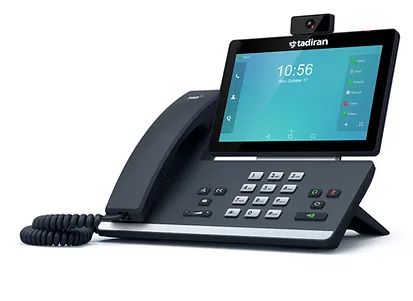
We offer business phone system installation services in Austin. We can install digital, analog, VoIP, hybrid, on-premise, and cloud-based phone systems. We customize the system to your requirement.

We offer business phone system troubleshooting services in Austin. We can help you troubleshoot digital, analog, VoIP, hybrid, on-premise, and cloud-based phone systems, even if you didn’t purchase the system from us. In the last few years, since VoIP has become more popular, many companies have gone out of business, leaving their customers hanging.

We offer business phone system moving services in Austin. We can help you move your digital, analog, VoIP, hybrid, on-premise, and cloud-based phone systems, even if you didn’t buy from us. Depending on your phone system, it can be complicated, especially with timeline constraints. We want to help you coordinate with your internet and phone services provider. We have been in business for 20 years. We see that far too many companies have downtime due to the move. Even if you have VoIP, you still need to ensure that your network is setup for VoIP.

Do you already have a phone system in place? Do you need to make some program changes? Do you just need to add 1 phone? Would you like some help figuring out a specific problem? Do you just need to update the directory and email address? Give us a call—there is no job too small for us.

Picture on the left is a red Lego telephone booth. My daughter wanted to learn more about the history of telephones, so I worked with her on this Lego build to keep her engaged. I remember keeping quarters in the ash tray of my car so I could make a phone call when we got a page (beeper). This was how we responded to emergency calls back in the late 1990’s and early 2000’s.

We evaluate your business needs, growth, and goals to help you choose the right phone system that aligns with your organization’s needs.
Based on your specific needs, we present different options that provide the most value for your business. You can explore our tailored packages.
Choose the plan and system that works best for you. We help you set it up and ensure that the implementation process is smooth and efficient.
Do you want to go to the cloud or stay on-premise business phone systems? How do you decide to go on cloud or premise? We get this question often, even today, in 2024, when VoIP business phone systems are so popular. Has Cloud-based VoIP taken over the majority of the business? Yes, but on-premises-based systems still play a critical role in helping certain companies. In most cases, especially for very small businesses, a cloud-based system is the way to go, except when your business is primarily local, where every employee needs to be on-site to be productive. We have seen this, especially in manufacturing, warehouse, or service businesses where customers always come to them. We have also seen this in more significant call centers and hotels with many analog lines; the cost of going cloud was too much. We saw this in business, where email and data availability are more important than phones. So, it’s more cost-effective for them to stay on-premises. If you are in the market for business phone systems and would like to weigh both options, give us a call. We want to help you decide what makes more business sense.
Pros
✅ Does not go down when network goes down.
✅ No worries about QoS of the internet.
✅ If your system is already paid for, it may have many years of life left. I’ve seen digital systems run for many years with minimum maintenance.
✅ Adding a phone handset or extension doesn’t add to your monthly recurring bill.
✅ Doesn’t need reliable internet – only stable power and connectivity.
Cons
❌ Upfront cost is usually higher than Cloud or Hosted Solutions.
❌ On-site hardware, power, internet, and phone lines must be maintained.
❌ Firmware updates and security can be a concern.
❌ Upgrades may require additional hardware; most systems have limitations.
❌ Fewer vendors support on-premise systems today.
❌ Setting up remote users can be challenging.
Pros
✅ No on-site hardware or software maintenance required.
✅ Often offers more features and flexibility.
✅ The hosted provider handles backup, upgrades, and security.
✅ Lower upfront cost – you pay only for what you need.
✅ Easier to upgrade or downsize if not locked in by contract.
✅ Supports multiple device types: mobile, PC, Mac, tablet, physical phones.
✅ Offers more API integration options.
Cons
❌ Monthly costs can be high for large user counts.
❌ Requires reliable, high-quality internet for good call quality.
❌ E911 accuracy may be a concern with mobile apps unless properly set up.
❌ Lobby and conference phones may incur additional monthly charges.
What features are must have for your business?
What is important to you?
Is downtime an issue?
Do you need redundancy?
What brands are the best?
Do you need SMS or Texting on your main number?
Can texting be shared with multiple employees?
How is SMS or texting on your main number different from a personal text?
With so many options, how do you choose?
How hard is it to switch, can you keep your current phone number?
How much bandwidth do I need?
How important is quality of service?
How important is flexibility?
How is the support service?
Do you have a web based conferencing system such as Microsoft Teams or Zoom?
Are you looking for a VoIP system that collaborates?
Do you need a system that integrates with your billing or CRM software?
What problems are you trying to solve?
How is your business changing?
How are you adapting to the change?
Are you growing, downsizing, moving?
Where do you see your business in one, two, five, or ten years?
How much are you currently spending?
What type of system do you have now?
What are your must-have features?
What kind of internet service do you currently have (bandwidth, upload, download, equipment)?
Would you like to use texting, collaboration, online meetings, or conference bridge?
Overloaded with questions? Give us a call. (512)-257-1433. We offer free consultation to help you decide.

When we get a question like that, in most cases, you have multiple vendors pushing you to go VoIP. There is not a one-size-fits-all scenario for all businesses. Depending on each company, there may not be a reason to. We had many businesses call us asking if we still install digital phone systems because they couldn’t find any vendor that can and is willing to do it. If you are in this situation, give us a call. We offer free consultation to help you understand whether it makes sense.
VoIP costs vary depending on the features and functions you require. In most cases, per seat costs range from $15.00 to $50.00 per user; that’s assuming decent wired internet is in place.
Depending on your configuration, VoIP may cost you more if you have an extensive existing on-premise system with few lines. On the other hand, it may help increase efficiency or solve problems. We offer free consultation to help you decide.
Cloud and VoIP are not the same. Cloud generally refers to hosted data, server, and storage solutions. VoIP is a protocol for voice over the internet. The differences in design, flexibility, security, and cost should be evaluated. We offer free consultation to help you decide.
That depends on the make and model of your phones and the features you require. We support many brands, including Wildix, Tadiran/Yealink, Polycom, Cisco, Fanvil, and Grandstream.