Security Camera Cabling Services in Austin

Business Communication Solutions offers home and business security camera cabling installation, troubleshooting, and repair services. Whether you want us to offer total solutions, or install a system you already have, or help troubleshoot and fix an existing system that other vendors do not want to maintain or service, give us a call. We offer affordable service and fast response time.

Types of Security Camera Cables that we install, service, troubleshoot, move, add, or change in Austin

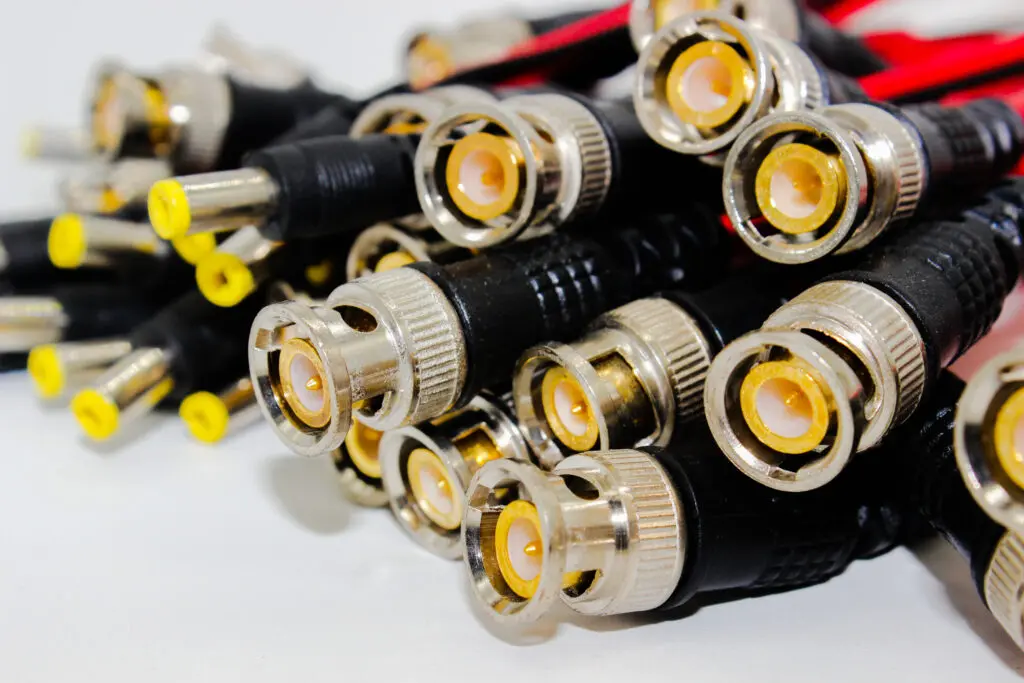
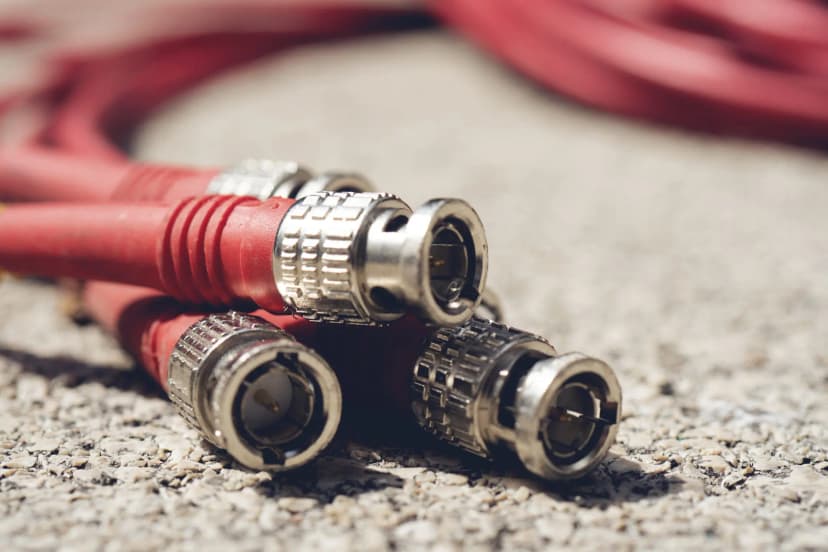
Picture here is an example of RG59, RG6, TVI with BNC connectors. It can be use on TV Antenna, Security Cameras, TV, and even radio. It was also used in the early days for computer networking. The advantage of these types of cables over Cat 5, Cat 5e, Cat 6 is that it can run up to 600′ without the need for a repeater vs 328′ for Cat 5, 5e, or Cat 6.

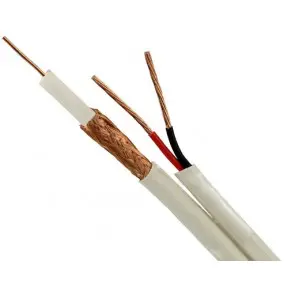
Here is an example of a Siamese RG59 or TVI cable. A Siamese cable is simply an RG59 cable with one pair of power cables connected to it, which simplifies the process of running the cables for the cameras. You can run power and video cables all in one shot.

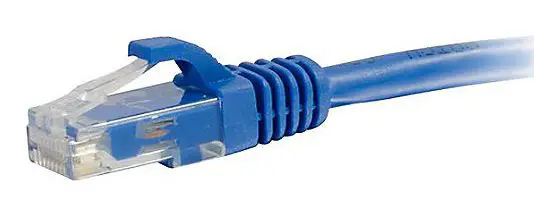
Here is an example of a Cat 6 cable with a male RJ 45 Modular plug. Cat 6 cables are much easier to work with than Siamese cables. Without a PoE extender, these cables can only run up to 328′. That’s still a decent distance for most homes and small businesses. If you need more than that, you can always install a PoE Extender or use a PoE Extender network switch. Cat 5, Cat 5e, and Cat 6 will look similar, except they may be smaller or bigger.

Types of Security Camera Cables Jackets Type that we install, service, troubleshoot, move, add, or change in Austin

Cable Jacket Type: PVC

PVC jacket types can be used specifically for indoor or outdoor applications. PVC jacket cable can be used in homes and businesses. The application includes but is not limited to the inside warehouses, outdoor installations, inside and outside of homes. Note: PVC (Polyvinyl Chloride) emits toxic fumes when burning. Therefore, certain business spaces require the use of plenum cables.


Cable Jacket Type: Plenum

Plenum jacket cables have teflon jackets, which are considered fire-retardant, so they help minimize fire spread. Plenum cables are usually used in plenum space. What is plenum space? Plenum space can be above ceiling tiles or below floor. It’s the space where air conditioning and HVAC systems are used. Most office buildings that have drop ceilings are required to run plenum cables.


Cable Jacket Type: CMR

CMR-Multifunctional Communications Cable, Riser is constructed of premium PVC and is fire-resistant. Its self-extinguishing capabilities allow it to survive extreme temperatures in any type of setting. To demonstrate that they are sufficiently flame retardant to stop a fire from spreading from one floor to another, CMR-rated cables must pass higher standards of testing. It designates Ethernet cables that may be used in a building’s plenum, such as a dropped ceiling, raised floor, and other air spaces.

Cable Jacket Type: OSP

OSP-Outside Plant describes all of the hardware, wires, and other infrastructure that is situated outside of a facility. OSP Cable Jacket material is made to endure outside conditions without requiring a flame rating in order to be used within a building greater than fifty feet. You can extend your network outside and cover a sizable campus with OSP’s ability to retain performance in the face of extreme weather conditions, including flooding, humidity, hot and low temperatures, and tearing and abrasion resistance.


Cable Jacket Type: Shielded

Shielded cables are made of insulating conductors covered in a layer of conventional conductor. In settings such as data centers, offices, and factories where computer technology, electrical equipment, or electronic equipment is frequently used, shielded cables serve as a means of protection and signal integrity maintenance against electromagnetic interference exposure.


Cable Jacket Type: Unshielded

Unshielded cables are less expensive and simpler to work with than shielded cables because they lack the metallic shield that surrounds them. Homes and offices that require low voltage frequently utilize this kind of connection. Signal deterioration may result from interference from other electrical equipment. For most situations where there is no sensitive or important data transfer, short distance cable runs, and no electromagnetic interference (EMI), unshielded cables are a good option.


Cable Jacket Type: Armored

Compared to regular cables, armored cables include a metal protective covering that makes them more appropriate for direct burial. It is especially made for places where corrosion and mechanical damage are common. Armored cables are used to enhance the corrosion resistance and mechanical strength of the cable. They are most suited for direct burial laying in rocky locations and can be laid using any method.


Cable Jacket Type: Burial

Burial cable is suited for wet, dry, and humid situations and is made to tolerate direct exposure to soil and moisture. It is intended to be buried underground in a trench. A solid thermoplastic sheath surrounds each individual electrical conducting wire inside the cable, keeping moisture out and safeguarding the wires from harm. Direct burial wires are used in a variety of applications, such as fiber optics, irrigation, cathodic protection, pet fencing, phone and other telecommunication cables, running electricity, and tracer wire installations for underground utilities.


Cable Jacket Type: Aerial

Aerial cables are normally similar to outdoor burial cables, but additionally, they have an extra wire for hanging the cable on a telephone pole, light pole, or the top side of a building.

Security Camera Cabling FAQ

Have some questions? Check out our FAQ Page to get quick answers.

Coaxial (TVI) vs Cat 5/6 Cable

Security cameras have evolved so much in the last decades. High-quality color cameras are much more affordable than they used to be. With most high-tech equipment, technology has consistently changed and evolved to improve quality; security cameras are no exception. Let’s look at different types of cable/cameras that are very popular in security cameras.

Coaxial (TVI) Cables

Coaxial (TVI) cables are designed for analog and HD security cameras, offering long-distance signal stability without network interference. They are ideal for traditional CCTV systems.

Cat6 Cable with rj45 modular plug

Cat6 cables with RJ45 modular plugs are used for IP-based cameras, providing higher bandwidth, faster data transmission, and network connectivity. Unlike coaxial, Cat6 supports PoE (Power over Ethernet), eliminating the need for separate power cables.

Ready to Get Started?

Contact us today to learn more about our services and how we can help your business.