

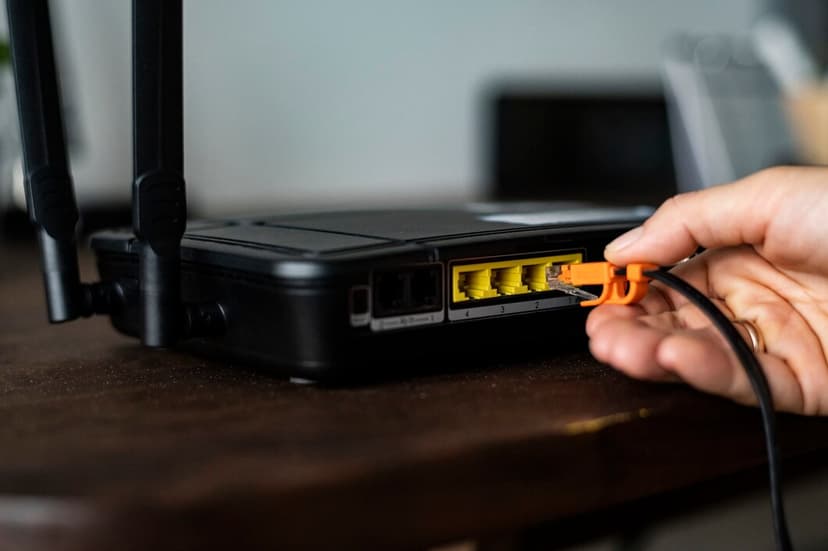
What is PoE?
Power over Ethernet (PoE) enables the transmission of both data and power through a single Ethernet cable. This technology eliminates the need for separate data and power cables, streamlining installation and cutting costs.
It is commonly utilized for devices such as wireless access points, IP cameras, and VoIP phones.
How Does PoE Work?
Power over Ethernet (PoE) technology injects direct current (DC) power into an Ethernet cable, concurrently with the data signal.
Devices equipped with Power over Ethernet (PoE) capability can receive electrical power through the same cable that provides their network connection, either via a network switch or a PoE injector.
Types of PoE:
IEEE 802.3af (PoE): Provides up to 15.4 watts of power per port.
IEEE 802.3at (PoE+): Offers up to 30 watts per port.
IEEE 802.3bt (PoE++): Delivers up to 60 watts or more per port.
Benefits:
Simplified installation: means there’s no requirement for separate power outlets close to devices.
Cost Savings:Reduced cabling and electrical work.
Flexibility:Easily move devices without rewiring.
Considerations:
Power Budget: Ensure your network switch or injector can handle the total power needed by connected devices.
Cable Length: Power over Ethernet (PoE) is effective up to a distance of 100 meters (328 feet) when using Cat5e, Cat6, Cat6a, Cat7, or Cat8 cables without the use of repeater or without minimizing ethernet speed.